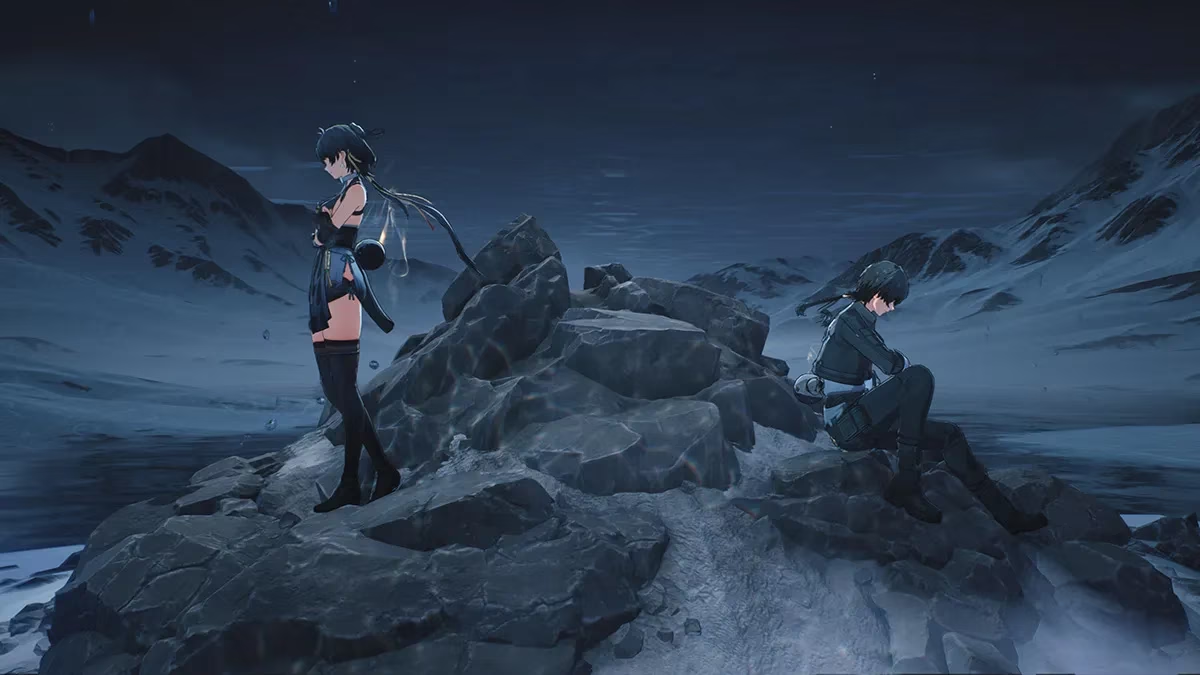
In the year 2026, two years after its thunderous launch, Wuthering Waves still greets every new player with the same silent question: who will walk this shattered world—a male Rover, or a female one? For a moment, the screen holds its breath, and the cursor hovers over two silhouettes that promise the same powers, the same story, but a wholly different presence. It’s a small decision, really, but the kind that nags at the back of the mind long after the first loading screen fades. Alex, a fresh-faced wanderer drawn by the game’s fluid combat and melancholic beauty, found himself frozen at that very crossroads. He had heard the rumors: the Rovers are identical in every mechanical way. No hidden stat bonuses, no exclusive dialogue branches, no secret cutscenes locked behind a single gender. Yet his finger wouldn’t click.
He leaned back and let out a long breath. “Honestly,” he muttered to himself, “I thought gacha games had gotten over this whole twin-protagonist thing by now.” But here it was, alive and well, and somehow more personal than he’d expected. The screen didn’t care about his internal debate. Two figures stood silently, the wind in their hair, the same confident stance—only the shape of the jaw and the pitch of the promised voice setting them apart. Alex remembered a forum post that had put it bluntly: combat might be the soul of Wuthering Waves, but the voice is its heartbeat. That heartbeat, he soon discovered, beat to very different rhythms depending on which Rover you chose.
He tabbed out and pulled up comparison videos, something he rarely did. The male Rover’s English voice came first. There was a dryness to it, a low-key assurance that made even the most absurd lines feel like deadpan comedy. When the dialogue option appeared—\u201cI’d rather chase butterflies than fight, but here we are\u201d—he delivered it with a shrug of the vocal cords, as if the character himself couldn’t quite believe the words leaving his mouth. It felt alive, in a quiet, subtle way. Then came the female Rover’s performance. Technically it was all there, every syllable in the right place, but something about it felt like an echo from a room too small. The butterfly line came out heavy, almost reproachful, as if the character were genuinely annoyed instead of whimsically resigned. Alex winced. It wasn’t bad, but it lacked the casual warmth that made the male counterpart sound like a companion you’d want by your side through collapsing cities and quiet star-filled fields.
Roleplay was another piece of the puzzle. The writing in this game, much like its sci-fi cousin Honkai: Star Rail, loves to hand you the clown shoes and dare you to wear them. One moment you’re facing down a tide of Tacet Discords, the next you’re choosing dialogue that essentially says, \u201cYeah, I stole your snacks. What are you gonna do about it?\u201d Alex imagined the male Rover delivering that with a half-smirk and a shrug, the female Rover with a sharp edge that might not land as playfully. It’s the kind of difference that seeps into every hour of a playthrough, slowly coloring the whole journey. You might not notice it at first, but by the fifth time a silly reply appears, you start caring deeply about which voice brings it to life.
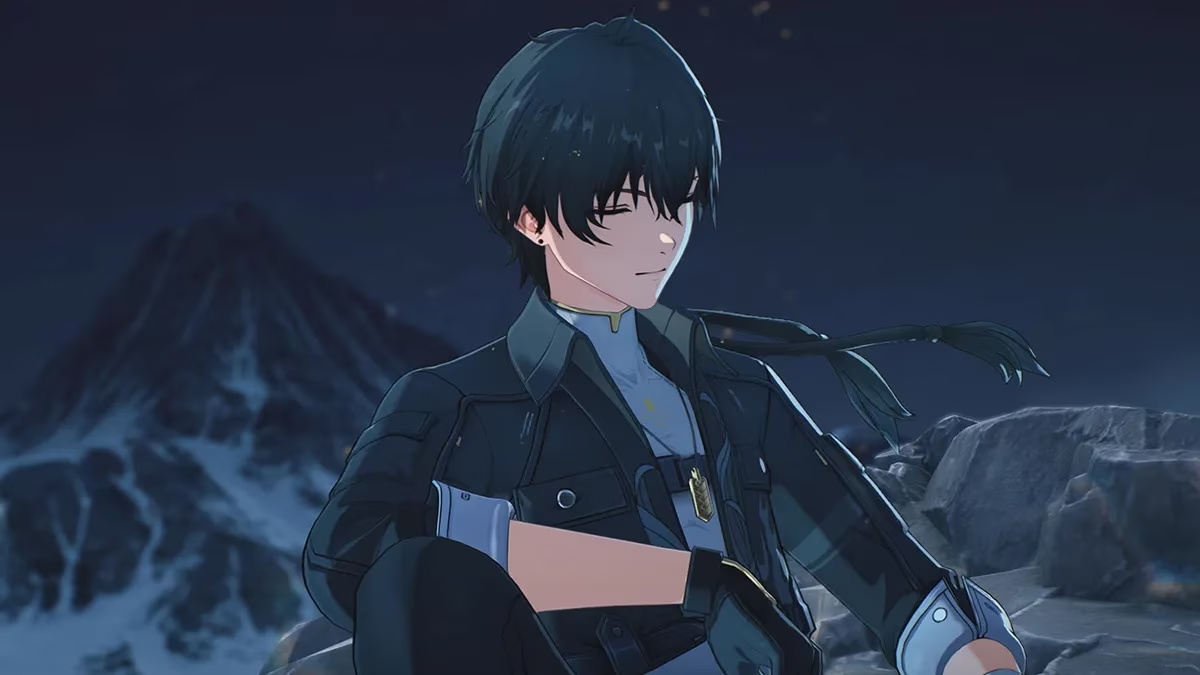
He clicked the male Rover. The selection wasn’t born from some grand philosophy; it was more like, \u201cYou know what? I’d rather laugh with this guy than cringe with the other.\u201d And as the first cinematic rolled and the male Rover’s dry tone filled his headphones, he felt a small but definite sense of rightness. In the weeks that followed, that choice kept paying off. During a tense alliance meeting, the male Rover cracked a completely deadpan \u201cSo, anyone want tea?\u201d and Alex nearly spat out his drink. It was a throwaway line, but the delivery made it stick. That’s the magic of Wuthering Waves: it gives you a vessel and lets you fill it with personality, but the voice sets the table for who that person will be.
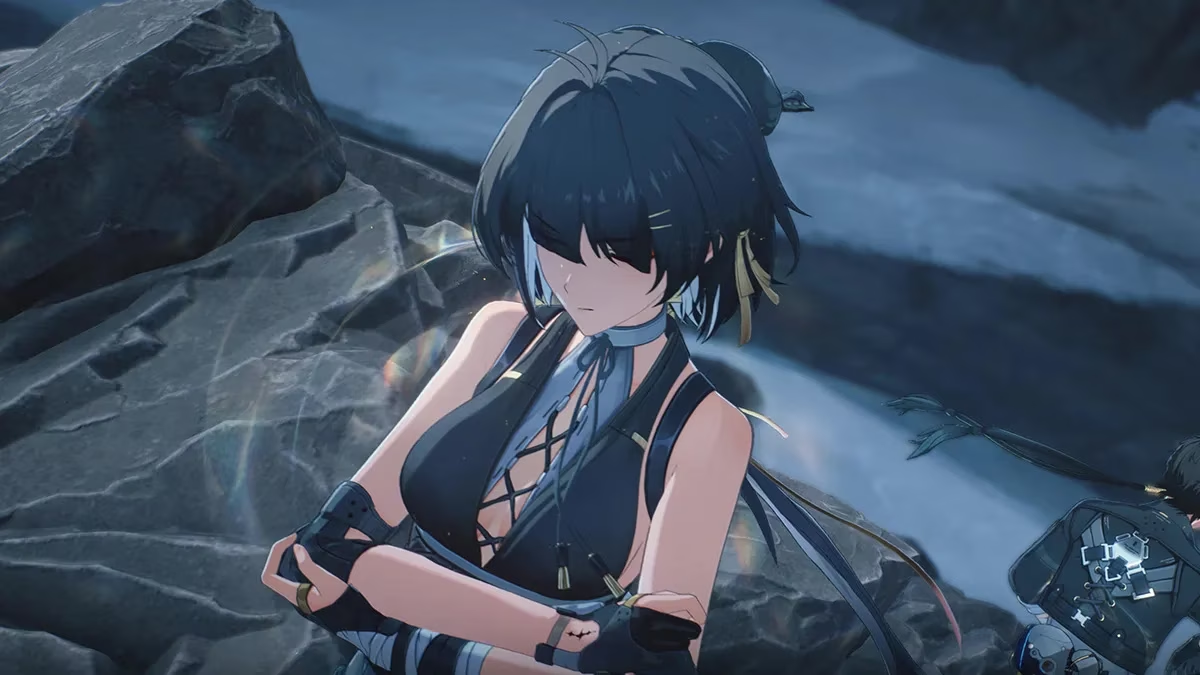
Still, he couldn’t deny the aesthetic pull of the other option. The female Rover’s design had its own grace—her movements in combat were lithe and sharp, her default expression a quiet enigma. For players who plan to bench the Rover the moment they collect enough five-star units, the whole debate might shrink to a single question: which character model do you want showing up in occasional story scenes? If the answer is \u201cthe one with prettier hair,\u201d well, that’s valid too. There’s no wrong door here, only different wallpaper on the same room. Alex occasionally scrolled through screenshots of the female Rover and thought, \u201cMaybe on a second account.\u201d
By the time the game’s second anniversary rolled around in early 2026, the community had long accepted this truth. Newcomers still asked the same question in chat channels, and veterans gave the same shrug. The choice is cosmetic. The abilities are identical. The storylines never fork. But somewhere between the voice acting and the way a character holds their shoulders during a storm, a preference takes root. Alex, now deep in the endgame with a fully built Rover he never swapped out, couldn’t imagine his version of the tale any other way. The male Rover had become his narrative anchor, a steady presence whose borderline-sarcastic asides made the world feel a little less doomed.
It all comes back to that first loading screen, to the split second where nothing happens because you can’t decide. The game waits. The wind loops. The Rovers stand still, and you realize you’re not choosing a fighter—you’re choosing a storyteller. And in Wuthering Waves, where every ruined landscape hides a whispered memory, the voice that tells your story matters more than any stat sheet. So go on. Listen to a few voice lines, squint at the character models, and pick the one that makes you smile. The rest will follow, one butterfly chase at a time.