In March 2024, a quiet update on Wuthering Waves' Epic Games Store page sent a shiver through the gacha community. For a fleeting moment, the page displayed a release date: May 30, 2024. Then, as suddenly as it appeared, the date vanished, replaced by a vague '2024.' The page had spoken, then clammed up. Fans were left scratching their heads. Was this a placeholder? A target date? A mistake? The internet did what it does best: it speculated wildly.
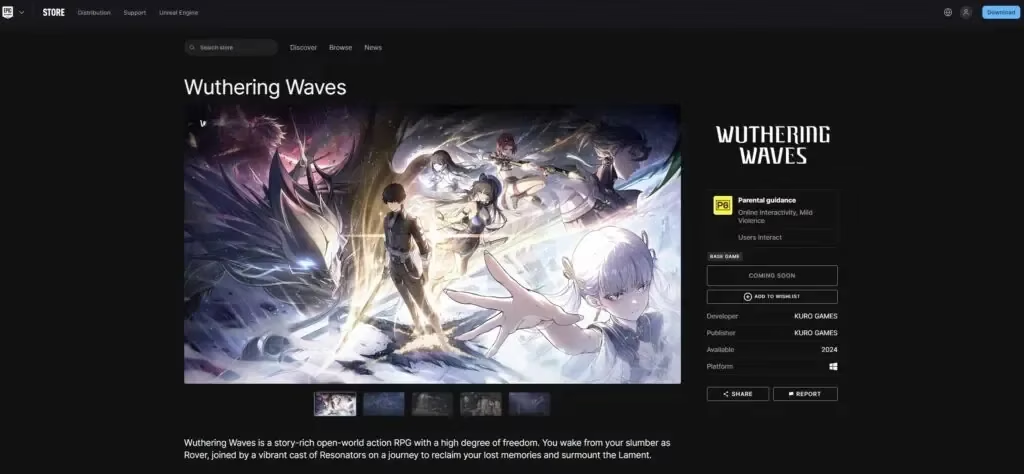
The timing was curious. Wuthering Waves had just wrapped its Closed Beta II, a test that showed players the game's basic systems: fluid combat, Echo captures, and a sprawling post-apocalyptic world. But it also revealed rough edges. The game was fun, yes, but it needed polish. A May 30 launch seemed aggressive, almost reckless. The developers at Kuro Games had built something ambitious, and the community could feel the potential. Yet the beta felt like a beautiful sketch, not a finished painting. So when the Epic Games Store page briefly promised a spring release, many players squinted. That date was a whole lot of nothing, they said. Just a placeholder. Right?
The 2024 Free-to-Play Battlefield
Context matters. In early 2024, the free-to-play mobile and PC market was heating up. Wuthering Waves was not alone. Other heavy hitters were gearing up:
| Game | Status in Early 2024 |
|---|---|
| Wuthering Waves | Closed Beta II concluded, release date TBD |
| Zenless Zone Zero | Pre-release hype, beta tests ongoing |
| Arknights: Endfield | Beta tests, no firm date |
2024 was bound to be a pivotal year for free-to-play gaming. Each title wanted a slice of the pie. Wuthering Waves, with its stylish combat and Echo system, aimed to challenge the status quo. But a May 30 release would have put it right in the middle of a crowded calendar. The developers likely knew that. The Epic Games Store page, perhaps, did not.
The Vanishing Act
When the May 30 date disappeared, the community's reaction was a mix of relief and disappointment. Relief because a rushed launch could have doomed the game. Disappointment because, well, players wanted to play. The page now said only '2024.' That was a promise with no teeth. It could mean anything. June? September? December? The ambiguity was maddening.
In hindsight, the removal was a clue. Store pages often use placeholder dates to satisfy platform requirements. They are not official announcements. They are digital placeholders, like a sticky note that says 'someday.' The fact that Epic Games Store updated and then scrubbed the date suggested someone had jumped the gun. The developer probably winced, then moved on.
What Actually Happened
Fast forward to 2026. Wuthering Waves did launch, but not on May 30. The actual release date was May 22, 2024 (PDT) / May 23, 2024 (UTC+8). The May 30 placeholder was wrong by a week. In the grand scheme, that is a rounding error. But at the time, it felt like a mystery. The game launched to strong player numbers, and it has since grown with new regions, characters, and events. The initial roughness was smoothed out. The Echo system matured. The story expanded. By 2026, Wuthering Waves is an established live-service title with a dedicated fanbase.
So what was the lesson? Store pages can be unreliable narrators. They can whisper secrets that are not secrets at all. They can create hype, then leave fans hanging. The May 30 incident was a tiny blip in a long journey. But it taught players to temper their expectations. A date on a store page is not a contract. It is a possibility.
A Pivotal Year, Remembered
Looking back from 2026, 2024 was indeed pivotal. Zenless Zone Zero launched later that year and found its own audience. Arknights: Endfield continued its development journey. The free-to-play space became more competitive, more polished, and more demanding. Wuthering Waves carved out its niche with fast-paced combat and a generous gacha system. The phantom May 30 date is now a trivia question, a footnote in the game's history.
Yet the incident still resonates. It showed how hungry players were for something new. It showed how a single line of text on a store page could ignite a thousand Reddit threads. And it showed that sometimes, the most interesting stories happen before a game even launches.
Perhaps the Epic Games Store page was never meant to be a prophet. Perhaps it was just a mirror, reflecting the community's own desperate hope. Perhaps… the date was a test, and everyone failed by caring too much. Or perhaps it was just a placeholder. In the end, Wuthering Waves arrived, and the players who waited were rewarded with a world worth exploring. The rest, as they say, is history. And history, unlike a store page, does not get deleted.
Did you follow the May 30 leak drama back in 2024? Share your memories in the comments below! 👇
Data referenced from SteamDB helps illustrate why early storefront “release dates” like the brief May 30, 2024 listing for Wuthering Waves can be misleading: backend entries and metadata often change quietly as publishers adjust timelines, depots, and regional availability before an official announcement, so fans should treat sudden date appearances (and disappearances) as volatile signals rather than confirmations.