I have spent hundreds of hours in both Wuthering Waves and Honkai: Star Rail, and in 2026 I still find myself defending each one to different friends. They share the same gacha DNA—limited banners, pity systems, daily stamina, and the eternal chase for perfect Echoes or Relics—but they could not feel more different once I actually load into their worlds. One asks me to dodge, parry, and explore every cliffside; the other asks me to calculate speed thresholds, skill points, and turn order before a single attack lands. That difference is exactly why I keep both installed.
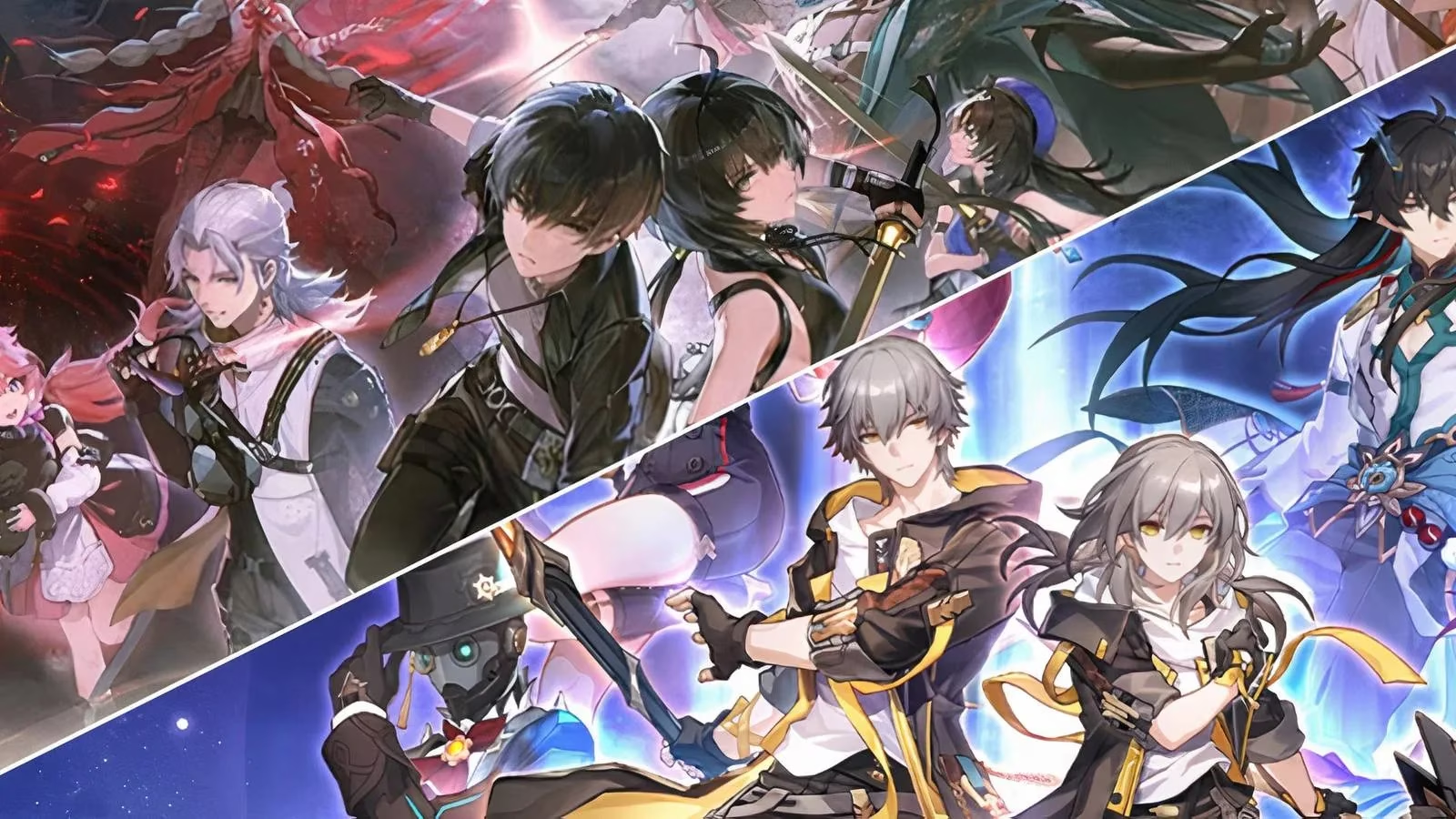
Core Identity: Open-World Action vs Turn-Based Space Odyssey
Wuthering Waves is an open-world action RPG set on Solaris-3, a futuristic post-apocalyptic world where traversal is at the forefront. I play as the Rover, sprinting across ruined landscapes, climbing towers, gliding between ridges, and diving into caves that hide treasure or bosses. The game wants me to move constantly, and its combat feels like a cousin to Genshin Impact: real-time hack-and-slash, dodging, parrying, and chaining massive boss battles in a bleak but beautiful setting.
Honkai: Star Rail, by contrast, is a turn-based JRPG that takes place across planets. I board the Astral Express as the Trailblazer, hopping from the snowy mountains of Jarilo-IV to the bourgeois dreamscape of Penacony and beyond. The universe is a device for variety: each new world brings a different aesthetic, history, and faction. In 2026, that formula still works because HoYoverse keeps introducing fresh conflicts and cultures.
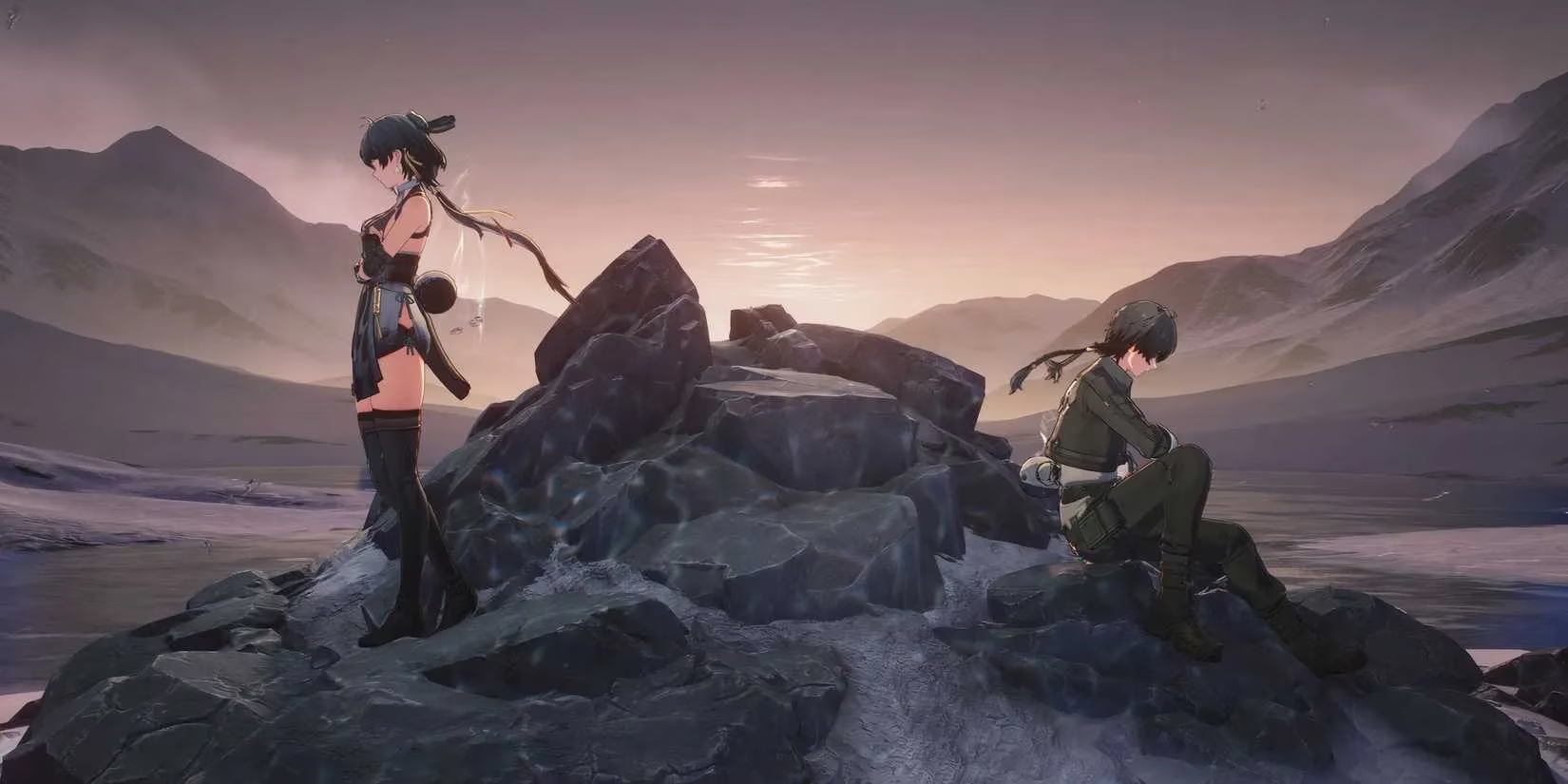
Exploration: Solaris-3 vs the Astral Express
Exploration is where I feel the widest gap. Solaris-3 is a sandbox for my Rover to run amok. I hunt for Beacons that expand my map, stumble into caves with secret treasure, and find hidden bosses tucked away from the main path. The world rewards curiosity with Echoes, resources, and small environmental stories. Even after years of updates, Wuthering Waves still gives me reasons to climb one more cliff or investigate one more ruin.
Honkai: Star Rail is not built for that kind of wandering. Its exploration is more limited: I walk through zones, talk to NPCs, solve simple puzzles, and collect lore tidbits. The environments are gorgeous, but they are stages for the story and combat rather than true open-world playgrounds. I do not get lost in Star Rail the way I get lost in Wuthering Waves, and that is intentional. The game wants me thinking about my next battle, not my next climb.
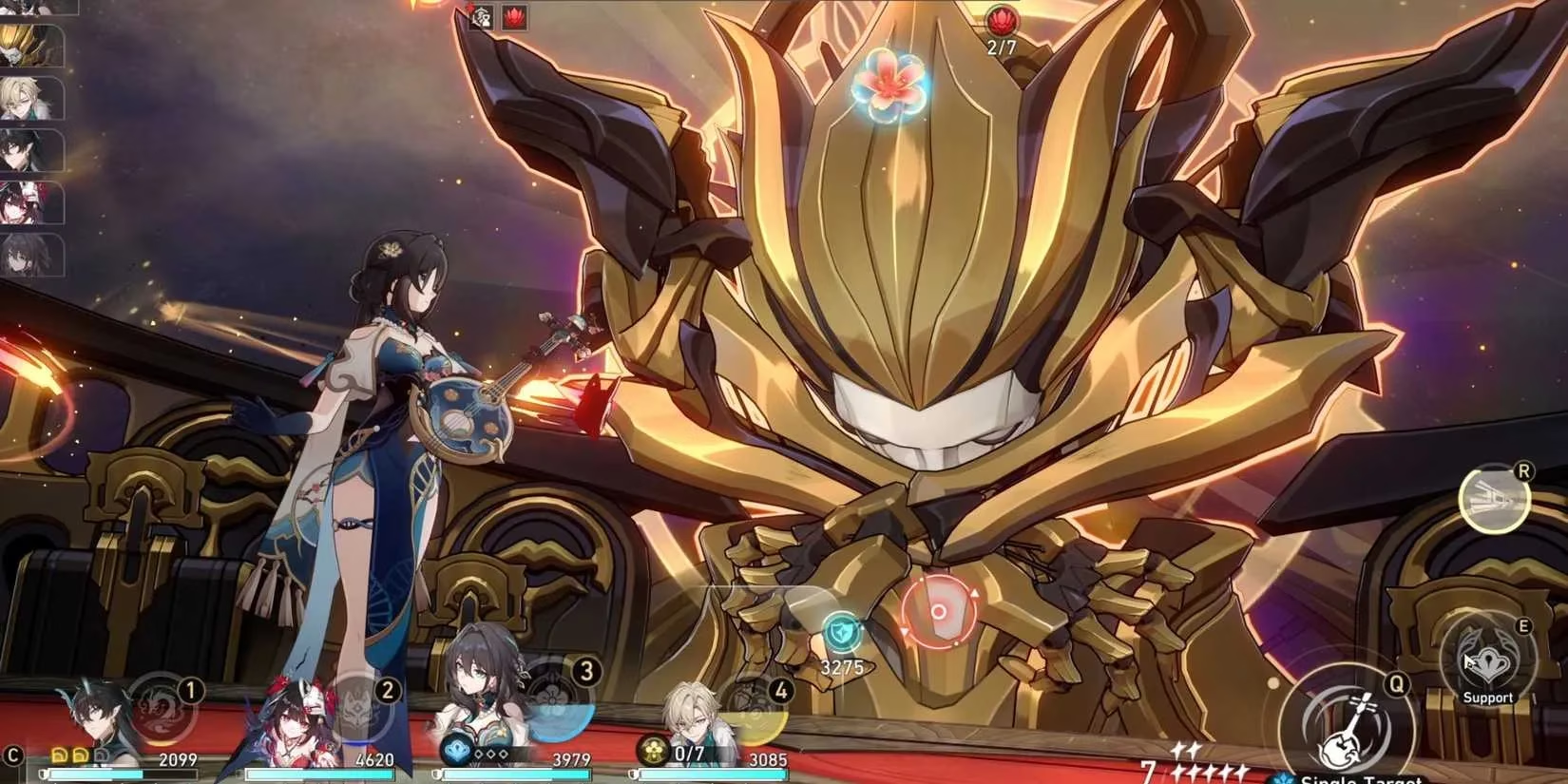
Combat: Real-Time Execution vs Strategic Planning
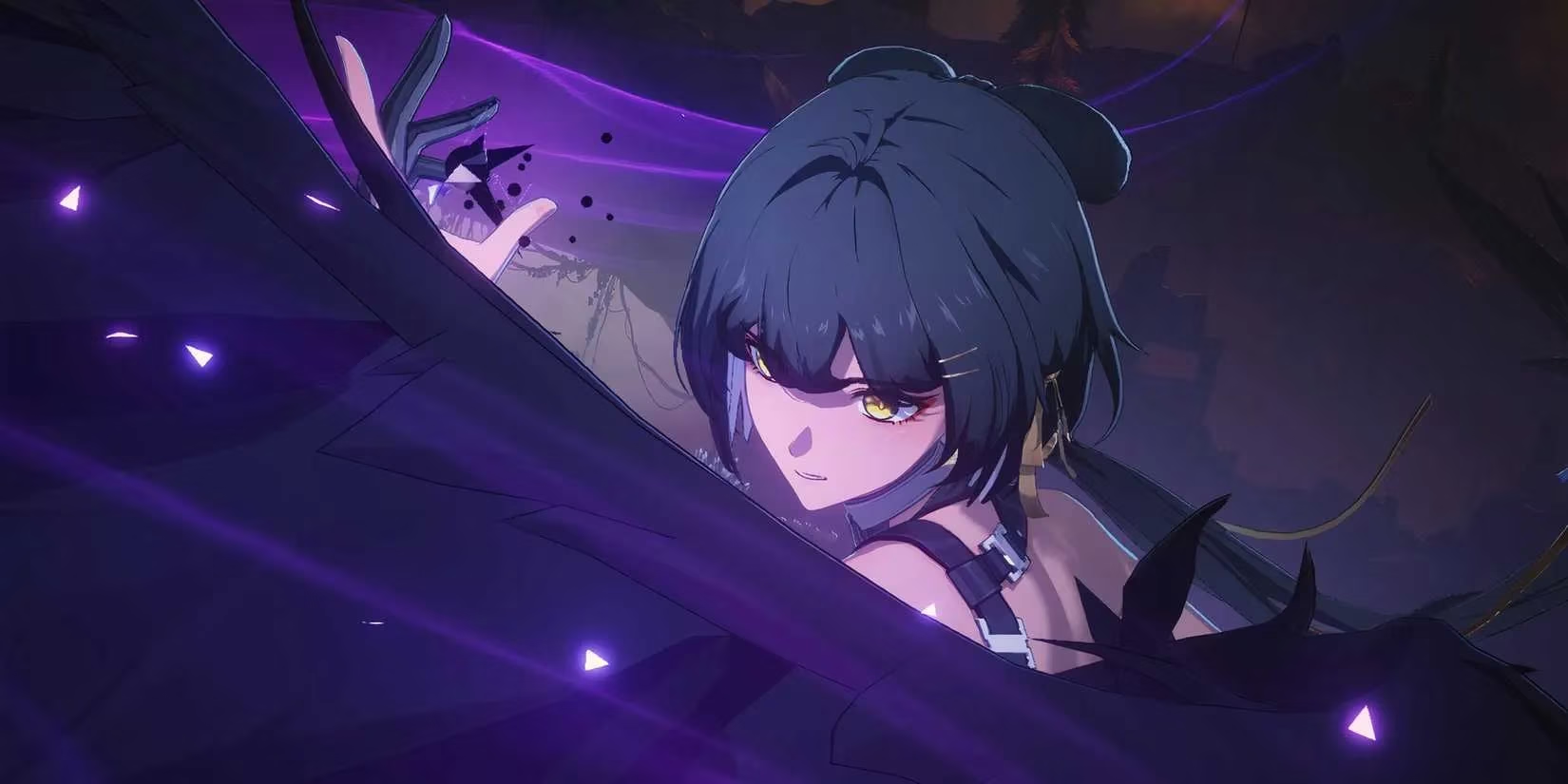
Combat is the hardest category to compare because both games excel at completely different fantasies. In Wuthering Waves, I control one character at a time, but I can swap between three party members to trigger Intro and Outro attacks. The action is fast, tactile, and demanding. I need to read boss animations, time dodges, parry heavy hits, and weave in Resonance Liberations. When I win a tough fight, I feel my hands and reflexes earned it.
In Honkai: Star Rail, I command a four-member party in turn-based battles. Turn order is everything. I manage skill points, basic attacks, skills, energy, and Ultimates. A well-timed Ultimate can demolish an enemy before they act, but a bad speed tuning can ruin a run. The combat is less about reflexes and more about planning, team synergy, and min-maxing values. I love it for the same reason I love puzzle games: it makes my brain sweat.
Characters and Gacha
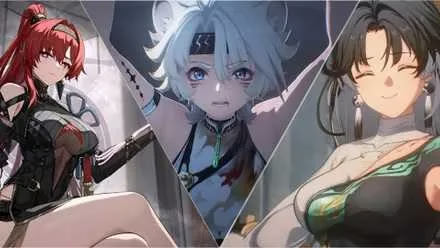
Both games are gacha games, so I spend a lot of time thinking about banners, pity, and team building. Honkai: Star Rail has been in service longer than Wuthering Waves, and its roster is enormous. I can field a small child accompanied by a fatherly robot, a devilish cowboy, a stoic knight, or a chaotic genius. The variation is staggering, and each character often brings a unique mechanic that changes how I approach a fight.
Wuthering Waves has a smaller roster, but its character design is just as strong. The first characters felt a bit tropey to me, yet they became fun the moment I added them to my party. In 2026, both games have expanded their casts, but Star Rail still wins on sheer variety while Wuthering Waves wins on how each character feels in my hands. I pull for different reasons: in Star Rail I chase synergy and meta; in Wuthering Waves I chase animation quality, movement tech, and satisfying combos.
Story, Lore, and Side Quests
Wuthering Waves carries an edgy, brooding atmosphere. Its post-apocalyptic setting creates despair, and I often feel a strange mix of hopelessness and curiosity. I want to know where the Rover came from and what the mischievous duo is trying to accomplish. However, the delivery of dialogue and the constant cramming of lore terms can become jarring. In a game so focused on action, learning the world sometimes feels secondary.
Star Rail, on the other hand, is a space opera. I am there for the pulls, sure, but the story of the Astral Express and the factions scattered across the universe is fascinating. Every time a new world appears with a new conflict, I welcome it. The writing is not always perfect, but the sense of adventure is consistent.
Side quests are where Wuthering Waves surprises me. Yes, there are boring fetch quests, but there are also long, winding stories that make me care about NPCs I can never roll for. I remember descending into a cave system to fight giant Echoes and prove that an NPC's brother was not a coward. The writing was compelling and entertaining when it was not throwing random world terms at me. Those moments hold my attention in a way that Star Rail's side content often does not.
Quick Comparison Table
| Category | Wuthering Waves | Honkai: Star Rail |
|---|---|---|
| Combat | Real-time action, dodges, parries, swaps | Turn-based, speed tuning, skill points |
| Exploration | Massive open zones, caves, hidden bosses | Smaller zones, puzzles, lore collectibles |
| Story Tone | Dark, post-apocalyptic, mysterious | Space opera, varied planets, factions |
| Roster | Smaller, stylish, action-focused | Larger, more archetypes and mechanics |
| Side Quests | Memorable, cinematic, NPC-driven | Uneven, more combat and lore focused |
| Endgame | Reflex and team execution | Stat optimization and turn planning |
Which Should You Play in 2026?
It is easy to put both games in the same box because they are gacha games with anime aesthetics, but in reality they are quite different. If I want hours of open-world exploration, an excellent traversal system, and a rewarding action combat system, I open Wuthering Waves. If I want hardcore strategy, min-maxing, and a universe that keeps expanding with new planets and factions, I open Honkai: Star Rail.
The real answer, as always, is to play both and decide for yourself. I do. One game lets me run, climb, and fight with my own two thumbs; the other lets me plan, calculate, and unleash the perfect Ultimate. In 2026, both are still worth my time, and they scratch different itches in my gamer brain. 🎮✨