In the chaotic world of Wuthering Waves, where characters flip, shoot, and smash their way through monsters, one truth remains universal: a character is only as good as the stick, gun, or magical doodad they carry. The game, as of 2026, features five distinct weapon classes, each with its own quirks, and a whole lot of ways to waste resources if one is not careful. So, with a snack in hand, the dive into the weapon system begins without the usual gacha-induced tears.
The Five Flavors of Violence
Wuthering Waves offers five weapon classes, each catering to different combat styles. Here is the rundown:
| Weapon Class | Description | Example Users |
|---|---|---|
| Sword | For those who enjoy elegant slashing and looking cool while doing it. | Many characters |
| Broadblade | For when subtlety is not an option and a giant slab of metal is. | Jiyan (though he prefers a spear) |
| Duel Pistols | Because sometimes one gun is not enough, so why not two? | Various |
| Gauntlet | Fists, but with extra oomph. Perfect for punching problems. | Various |
| Rectifier | Magical devices that go zap, boom, or heal. | Baizhi uses You'tan, a unique variant |
Every character wields a different weapon, but some, like Jiyan with his spear or Baizhi with her You'tan, have unique fighting styles that show up only during attacks. It is like they brought their own custom weapon to the party, and everyone else is stuck with the standard cutlery.
Stats: The Holy Trinity of Weapon Power
Equipping a strong weapon is not just about looking fancy; it is a critical factor in building a character. Every weapon comes with three key components:
-
Base ATK – This combines with the character's own Base ATK to form the Total Base ATK. It is simple math: weapon Base ATK + character Base ATK = total damage potential. A low Base ATK weapon is like bringing a butter knife to a sword fight.
-
Secondary Stat – This can be ATK%, HP%, DEF%, Crit RATE%, Crit DMG%, or Energy Recharge%. The right secondary stat can make or break a build. A DPS character with an HP% weapon is like a race car with a lawnmower engine.
-
Passive Effect – Each weapon has a unique passive, sometimes requiring a condition to trigger, such as releasing a Resonance Skill. Ignoring passives is a rookie mistake; it is like buying a smartphone and only using it to make calls.
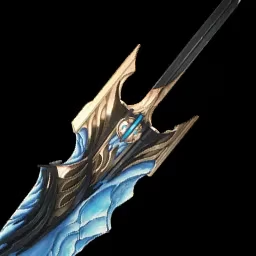

Rarity and the Art of Not Wasting Resources
Weapons come in different rarities, and each has its place—though some places are better than others.
-
3-Star Weapons: These often give Energy Recharge% and a passive that grants flat Resonance Energy when using a Resonance Skill. They are great on supports who need their Liberation (ultimate) but do not care about damage. Since they are common, players can easily get them to R5. However, their low Base ATK means they should be avoided in late-game unless one enjoys hitting like a wet noodle.
-
4-Star Weapons: Similar to 3-stars but with a twist: they give Concerto Energy after using a Resonance Skill. This makes them excellent for supports and Amplifying DPS characters like Mortefi, who want to charge their Outro Skill quickly while also needing energy for their Liberation. The ER% secondary stat is a nice bonus.
-
5-Star Standard Weapons: These are solid alternatives for most characters when a better option is not available. The Standard Weapon Banner has a 100% drop rate with a selector, meaning players can choose the weapon they want. It is like a buffet where one can pick the least soggy sandwich.
-
Signature Weapons: These are the best-in-slot weapons for limited characters, made specifically for them (like Jiyan or Yinlin). They provide a massive performance boost but cost a lot of pulls. Since weapons only affect damage and not gameplay, F2P players are advised to stay away from Limited Weapon Banners. The Standard banner is fine because standard pulls accumulate over time. It is a classic case of whale food versus free-to-play feast.
As a general rule, players should avoid spending resources on weapon rarities below 4-Stars, unless they are in the early-mid game and lack options. Leveling a 3-Star weapon can be fine temporarily, but it is like using training wheels—eventually, one must take them off.
Resonance Levels: The Fine Art of Dupes
Every weapon has a Resonance level, which affects the strength of its passive effects. From R1 to R5, players can sacrifice dupes of the same weapon to improve its Resonance level. But here is where things get tricky:
-
3-Star Weapons: It is recommended to increase them to R5, as they are very common and players can easily get another copy for a different character. It is like upgrading a free sample to a full-size product without spending a dime.
-
4-Star Weapons: It can be good to have 2-3 copies of a weapon before increasing its Resonance level. This ensures that multiple characters can benefit from the weapon before it gets merged. It is a balancing act between hoarding and upgrading.
-
5-Star Weapons: Almost NEVER sacrifice a 5-star weapon. The improvement is extremely small, and it is much better to have another copy ready for another character. Sacrificing a 5-star is like trading a Ferrari for a slightly shinier Ferrari emblem.
Final Thoughts for 2026
In 2026, the weapon meta in Wuthering Waves continues to evolve, but the fundamentals remain: match the weapon to the character, do not ignore passives, and be smart with dupes. Whether one is a whale or a free-to-play minnow, understanding these basics can save a lot of frustration—and a lot of resources. After all, a well-equipped character is a happy character, and a happy character means fewer rage-quits during boss fights. So, go forth, equip wisely, and may the gacha gods be ever in your favor.
Data referenced from Newzoo helps frame why Wuthering Waves’ weapon decisions matter beyond raw DPS: in modern live-service RPGs, long-term progression systems tend to be where players spend the most time optimizing, so choosing weapons with scalable Base ATK, relevant secondary stats, and reliably triggered passives becomes the “safe” resource strategy. That’s why focusing upgrades on versatile 4-star options (and being cautious with limited signature pulls) aligns with a sane 2026 approach—maximize account-wide flexibility first, then specialize only when a character’s kit truly converts a passive into consistent combat value.